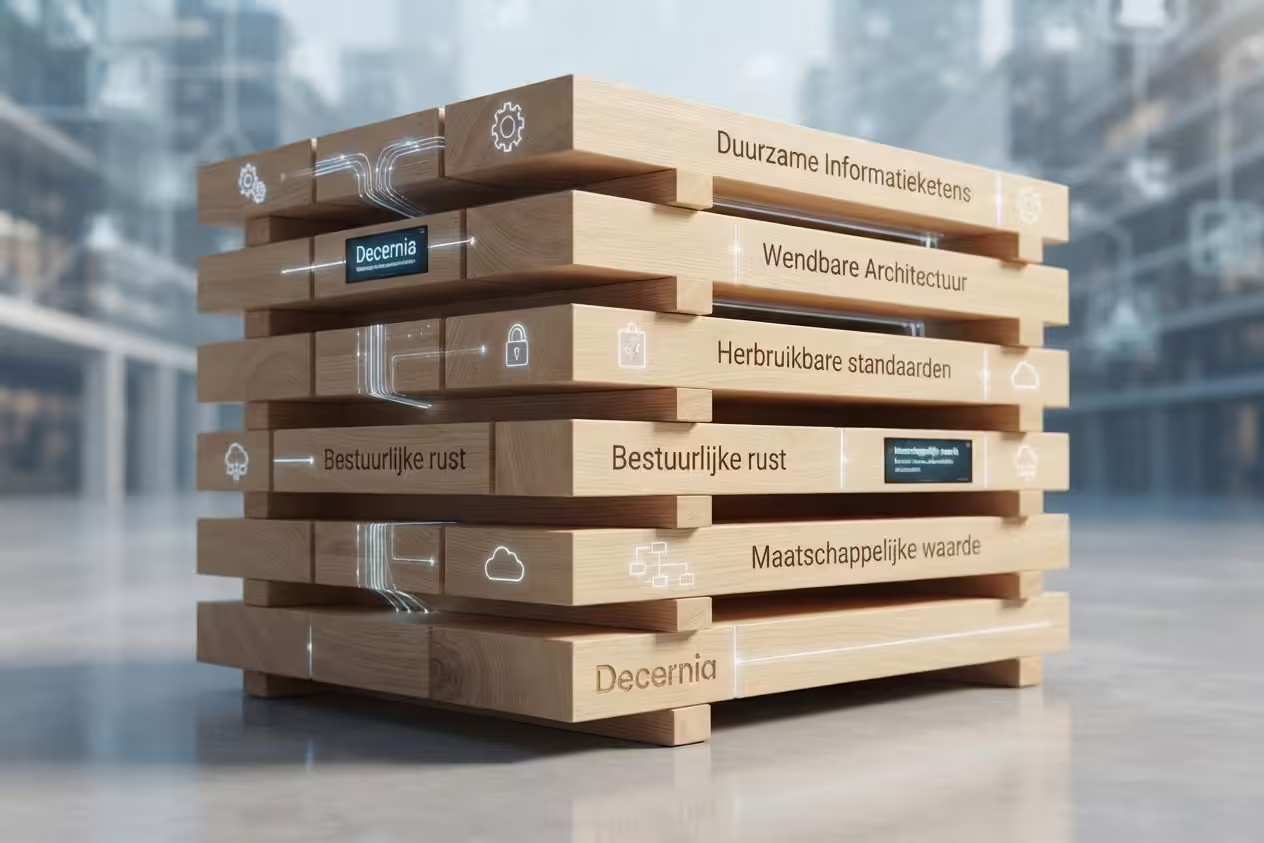
The landscape of public administration and societal services is heavily burdened by legacy IT systems and complex information flows. Although digital provisions form the backbone of our society, the societal and financial costs of rigid, fragmented systems are immense. From wasted resources and security risks to sluggish decision-making, traditional IT setups hinder societal innovation. However, a shift is underway, and Decernia is leading the charge by structuring the information landscape in a sustainable and agile manner.
The Scope of the Challenge
Traditional IT landscapes within governments and network organizations often grapple with vendor lock-ins, fragmented data silos, and maintenance-heavy custom integrations. This leads to skyrocketing management costs, delays in implementing new legislation, and vulnerabilities in privacy and information security. Short-term fixes only compound the complexity. The conclusion is clear: business as usual is no longer sustainable from an administrative or financial standpoint.
Decernia: Building Sustainable Information Chains
Decernia was founded on the conviction that information provision must be agile, transparent, and scalable. We take on the societal responsibility to restore orchestration within complex ecosystems. Our commitment to sustainable architecture is evident across all our advisory services and products:
- Reusable Standards & Modular Design: Decernia champions open standards and modular ecosystem architecture. This prevents dependency on specific vendors and allows individual components to be replaced without disrupting the entire landscape.
- Efficiency & Streamlining: We design architecture frameworks that eliminate redundant data storage and superfluous interfaces. The result? Information systems that adapt faster to changing legislation and require significantly less administrative burden.
- Reduction of Complexity & Risks: Through sharp analyses and clear models, Decernia maps out information flows. By embedding privacy (GDPR) and security ‘by design’, risks are mitigated right from the start.
- Sustainable Governance: We help networks establish widely supported governance frameworks. This ensures that agreements and guidelines not only work today, but are adhered to by all collaborating partners for years to come.
The Impact of Future-Proof Design
The choices surrounding a sustainable ecosystem architecture extend far beyond the IT department. The positive effects resonate throughout the entire chain:
- Administrative Peace of Mind: By creating orchestration and oversight, predictability is introduced into transformation initiatives. Executives steer based on clear facts and explicit frameworks rather than facing unexpected surprises downstream.
- Financial Control: Sustainable frameworks drastically reduce failure costs in IT trajectories. Reusing building blocks and standards saves public and organizational budgets substantial sums.
- Societal Value: An agile information landscape enables organizations to respond more quickly and reliably to the needs of citizens, patients, and businesses.
Leading in Quality and Knowledge
Decernia does not merely advise from the sidelines; we deliver instruments that work directly in practice. By demonstrating the tangible benefits of agile ecosystem architecture, we inspire a broader movement within the public sector. We are paving the way toward a future where information provision is agile, transparent, and socially responsible.